
June 07, 2026
Unpacking the Golf Sports Ecosystem and High-Potential Avenues for Modern Startups”
Golf in Egypt occupies a unique position at the crossroads of history, tourism, and untapped sporting potential. While the country is globally renowned for its ancient wonders, Mediterranean Sea and Red Sea resorts, its golf ecosystem has remained relatively niche, despite considerable promise. Egypt currently boasts many courses, with notable concentrations in Cairo, Alexandria, Alamin, and key tourist hubs such as Sharm el-Sheikh, Hurghada, and the North Coast. Several of these facilities are championship-level designs by legendary architects. Most courses are attached to five-star hotels or gated communities, catering primarily to foreign tourists and affluent locals. However, grassroots participation remains limited, public access is scarce, and the sport is widely perceived as expensive and exclusive. Furthermore, Egyptian golf facilities face operational challenges ranging from water scarcity and high maintenance costs to a lack of digital infrastructure and junior development programs. At the same time, the government’s broader push for sports tourism, recent hosting of professional events, and the rise of domestic golf academies signal that the sector is on the cusp of evolution. For entrepreneurs, Egypt presents a fascinating paradox: a golf ecosystem that is underdeveloped in many commercial and technological aspects yet rich in land, sunlight, tourism flow, and a growing appetite for premium leisure experiences.
Beyond the fairway, the golf sports ecosystem globally is far more than a collection of manicured greens and clubhouses. It is a multi-billion-dollar value chain encompassing equipment manufacturing, apparel, media rights, tournament organisation, coaching, travel, hospitality, and increasingly, technology and data analytics. Traditionally perceived as slow-moving and elite-oriented, golf has undergone a rapid transformation in recent years, driven by demographic shifts, digital disruption, and sustainability pressures. The rise of simulators, flexible tee times enabled by remote work, and inclusive formats such as Topgolf and short courses have expanded the sport’s appeal beyond retired businessmen to include younger, more diverse, and time-conscious participants. Yet despite this evolution, significant pain points remain. Access and affordability still deter newcomers.
Golf performance data remains fragmented across devices and platforms. Course operators struggle with water usage, chemical input, and rising land costs. Many clubs still rely on outdated software or manual spreadsheets. And while professional golf generates massive media attention, the amateur and recreational segments remain underserved in terms of digital engagement and community building. These gaps, rather than signs of decline, are in fact opportunity zones for innovative startups.
For entrepreneurs looking to enter the golf space, the possibilities span multiple categories. In technology and software as a service, an artificial intelligence-powered tee time and pace of play optimiser could help courses maximise revenue while reducing on-course congestion. In sustainability, a water-smart turf monitoring system using Internet of Things sensors combined with a subscription analytics dashboard would address one of the industry’s most pressing environmental and financial challenges. Gamification also offers fertile ground; a mobile application that transforms practice range sessions into skill-based challenges with rewards and leaderboards could drive retention among casual golfers. A peer-to-peer marketplace for gear rental would serve travelling golfers who prefer not to transport clubs. In media and content, niche streaming and analytics for amateur tournaments represent an entirely underserved segment. Coaching technology remains another high-potential area, specifically a low-cost swing capture and biomechanics feedback tool that works via smartphone, offering an alternative to expensive launch monitors like TrackMan.

Urban hospitality concepts such as pop-up simulators and putting lounges can introduce golf to dense city populations with limited access to full-length courses. Direct-to-consumer sustainable golf apparel and accessories are gaining traction among environmentally conscious players. Community platforms that connect solo golfers with local groups in a social, app-based manner solve a persistent friction point for the sport.
Finally, business-to-business services such as environmental, social, and governance reporting with carbon offset tools for golf resorts are increasingly demanded by institutional investors and eco-minded travellers.
A brief look at successful startups in the golf space illustrates the path forward. Companies like GolfNow revolutionised tee time bookings through a digital marketplace.
18Birdies built a loyal following by combining GPS, start tracking, and social features for amateur golfers.
For any new venture, the go-to-market strategy must account for the seasonal and relationship-driven nature of golf. Piloting with independent clubs is often easier than navigating the bureaucracy of large resorts. Partnering with PGA professionals or local golf personalities can provide credibility and user acquisition. Monetisation should be flexible, with annual subscriptions for courses, per-round fees for players, or hybrid models. Off-season revenue streams such as indoor simulators, online coaching, or merchandise sales are essential for financial stability. On-course demonstrations, tournament sponsorships, and presence at sim centres tend to yield higher quality customer acquisition than digital ads alone.

Looking ahead, the golf ecosystem is poised for further disruption through augmented and virtual reality, wearable technology, and metaverse-based golf experiences. The rise of fast golf, meaning nine-hole rounds or par 3 courses, caters to time-pressed urban players.
Climate-adaptive course design will likely emerge as a service opportunity for agronomists and tech providers. Investment trends already show that sports technology venture capital funding has grown significantly in the post-COVID era, with golf tech attracting a dedicated subset of investors.
R & A Golf Course 2030 (GC2030) is a way of helping golf to manage the impact of climate change, consider the use of resources and prepare for the effects future regulations could have on course conditioning.
For an entrepreneur based in Egypt or targeting the Middle East and North Africa region, the timing is particularly favourable. Egypt’s strategic location as a winter sun destination for European golfers, combined with relatively low land and labour costs compared to the Gulf states, offers a cost advantage.
The lack of dominant local players in golf software, sustainability services, and grassroots engagement means that first-move opportunities exist. Moreover, Egypt’s young, tech-savvy population could be activated through affordable driving ranges, school programs, and digital platforms that reduce the intimidation factor associated with traditional clubs.
A particularly compelling example of such grassroots innovation in Egypt is the partnership between ESLSCA University and Omar Ashraf, an ESLSCA alumnus who serves as Co-Founder and Chief Executive Officer of Egypt Golf Tour, alongside Youssef Hegazy, Co-Founder and Managing Director. Together, they are driving the game forward by bridging academic business education with on-the-ground sports entrepreneurship.
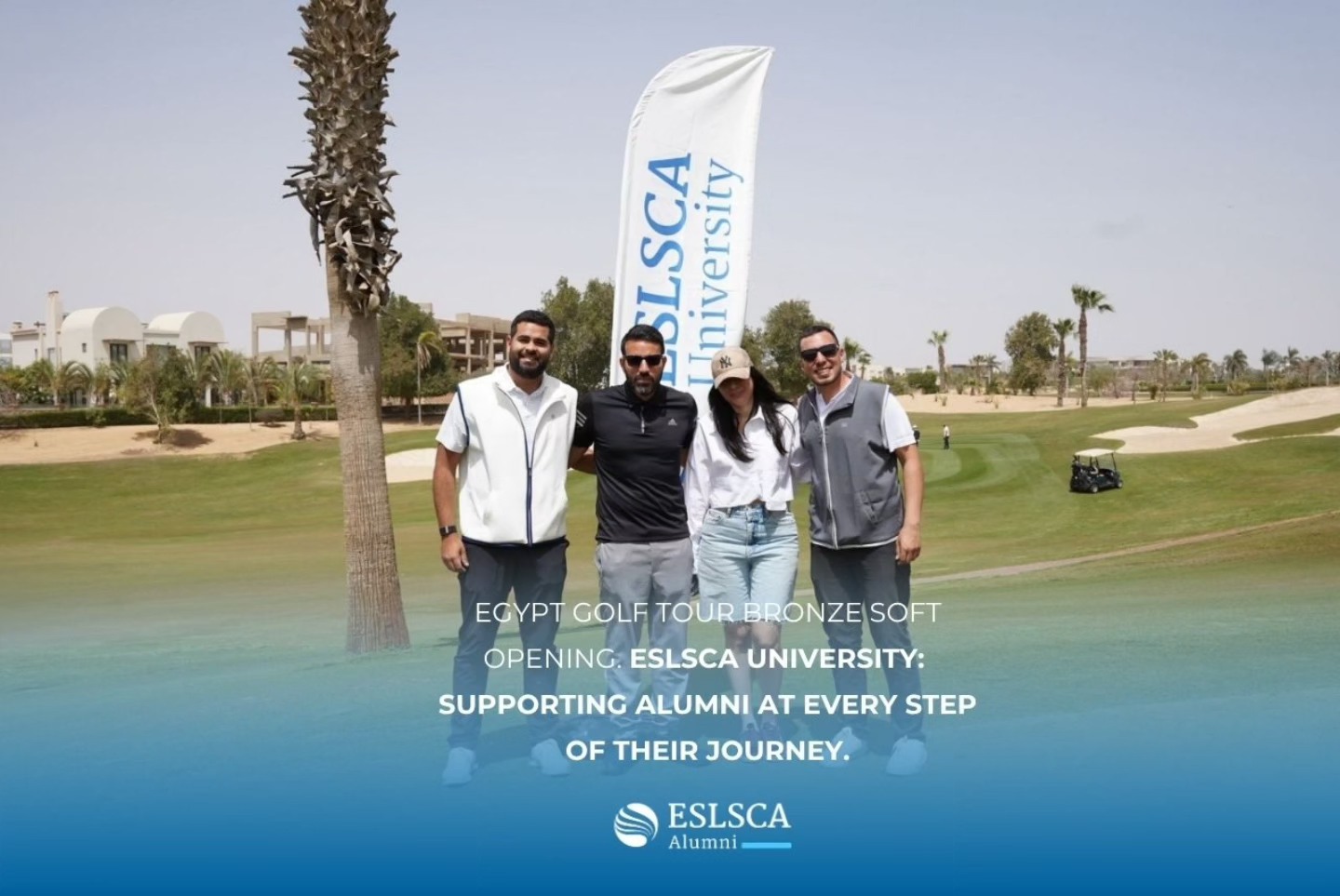
Egypt Golf Tour has emerged as a platform dedicated to organising competitive yet accessible golf events, fostering a community of amateur and aspiring professional golfers across the country, and creating pathways for younger players who might otherwise be excluded by the sport’s traditional cost barriers.
In conclusion, the golf sports ecosystem is far from a closed, old-fashioned industry. It is a dynamic and increasingly open field for innovation, with clear pain points across access, data, sustainability, and community. Egypt, with its existing albeit underdeveloped golf facilities, growing tourism sector, and supportive government interest in sports, represents a fertile ground for new ventures. Entrepreneurs who start small, focus on a specific niche problem, and leverage golf’s loyal, high lifetime value customer base will find ample opportunity. Whether through technology, sustainability, hospitality, or media, the path to building a successful golf-focused startup begins with recognising that the fairway is no longer just for players; it is for innovators as well.
The Most Popular ‘Bandersnatch’ Choices Show We're Not All Complete Monsters
BY: Taylor Hosking
The Most Popular ‘Bandersnatch’ Choices Show We're Not All Complete Monsters
BY: Taylor Hosking
The Most Popular ‘Bandersnatch’ Choices Show We're Not All Complete Monsters
BY: Taylor Hosking
suggestions
-

Golf
Omar H. Talaat Moustafa
An Exclusive Interview with the President of the Egyptian Golf Federation
-

Golf
The Egyptian Golf Series
Mohamed Anwar Explains a New Era for Golf in Egypt
-

Golf
Inside the PGA Championship
Power, Pressure, Prestige
-

Golf
The Golden Jubilee of Moroccan Golf
A Legacy of Prestige, Vision and Excellence at the Hassan II Trophy
-

Golf
Beyond the Fairway
Unpacking the Golf Sports Ecosystem and High-Potential Avenues for Modern Startups”
-

Golf
The Top 5 Women’s Golfers 2026
From Thitikul’s poise to Korda’s power, the five players who define the pinnacle of the women’s game
Golf
Omar H. Talaat Moustafa
An Exclusive Interview with the President of the Egyptia
Golf
The Egyptian Golf Series
Mohamed Anwar Explains a New Era for Golf in Egypt
Golf
Inside the PGA Championship
Power, Pressure, Prestige
Golf
The Golden Jubilee of Moroccan Golf
A Legacy of Prestige, Vision and Excellence at the Hassan II
Golf
Beyond the Fairway
Unpacking the Golf Sports Ecosystem and High-Potential Avenu...
Golf
The Top 5 Women’s Golfers 2026
From Thitikul’s poise to Korda’s power, the five players who...