February 04, 2026
The Thrill of Egypt’s Rowing, Kayaking and Canoeing
In this special issue, all about boats and the sea, we plunge into the exciting world of water sports, spotlighting rowing, canoeing, and kayaking. Featured in the Olympic Games yet open to all, these sports offer excitement on the water, whether you are chasing medals or enjoying the thrill of paddling.
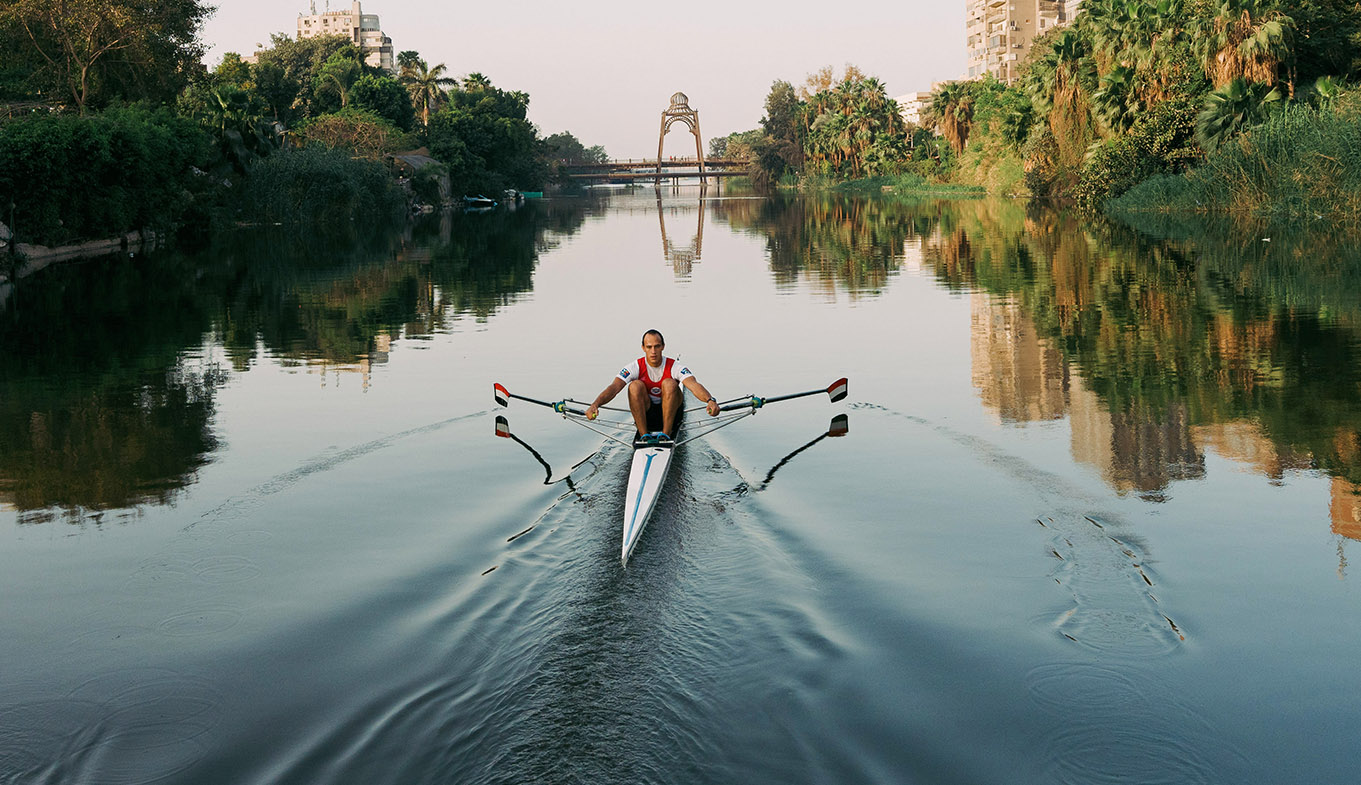
Rowing
Rowers use oars attached to their streamlined boat, called a shell, to push through the water and build speed while facing backwards. Different types of rowing include sculling rowing, where each rower uses two oars, one in each hand, and sweep rowing, where each rower uses one oar held with both hands. Other forms include coastal rowing, which takes place in open water and has waves and rougher conditions. Indoor rowing involves machines used for fitness or competitions with several types of rowing machines, including air, magnetic, water and hydraulic.
Egypt is considered one of the top countries in Africa and the Arab region for rowing. Egypt first took part in the Olympic Games in 1948, where Hamza Amera competed in the Men’s Single Sculls events. Another prominent athlete is Ali Ibrahim, who represented Egypt in four consecutive games, including Atlanta in 1996, Sydney in 2000, Athens in 2004 and Beijing in 2008. One of Egypt’s strongest rowing results was achieved in the Atlanta games of 1996, where Egypt placed eighth.
Rowing in Egypt is currently experiencing a revival and is receiving significant attention from the federation and the government. Significant achievements include Omar Al Amati being the first Egyptian rower to win a medal at the junior world level.
Ali Alaa Paves the Way for Coastal Rowing
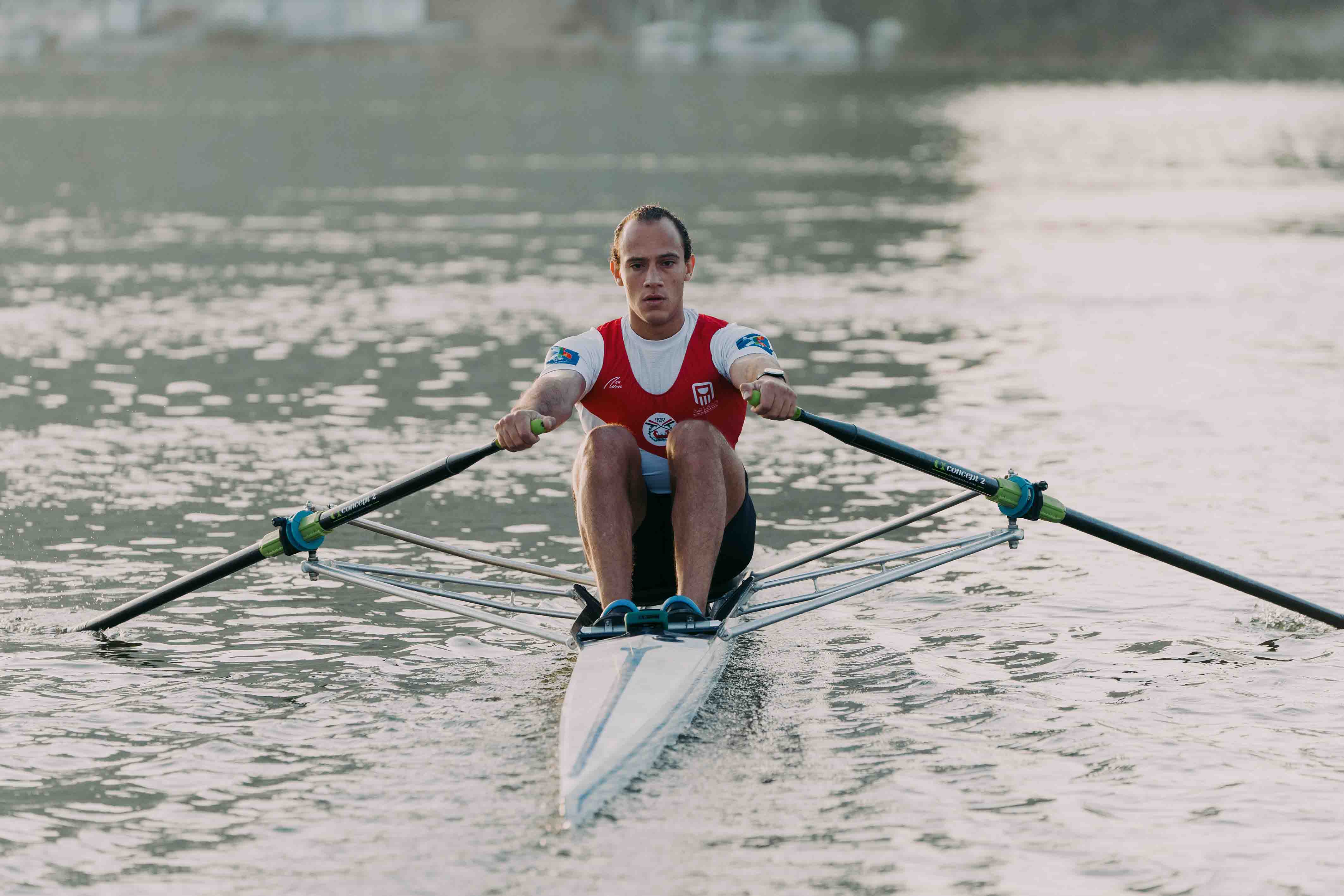
Ali Alaa El Din Ali Hassan, born in 1991, has been a rower since the age of 14. Ali, motivated by his father's example, chose to pursue a career in this dynamic water sport. His father has been an Egyptian rower for several years and has previously participated in multiple world championships and international events.
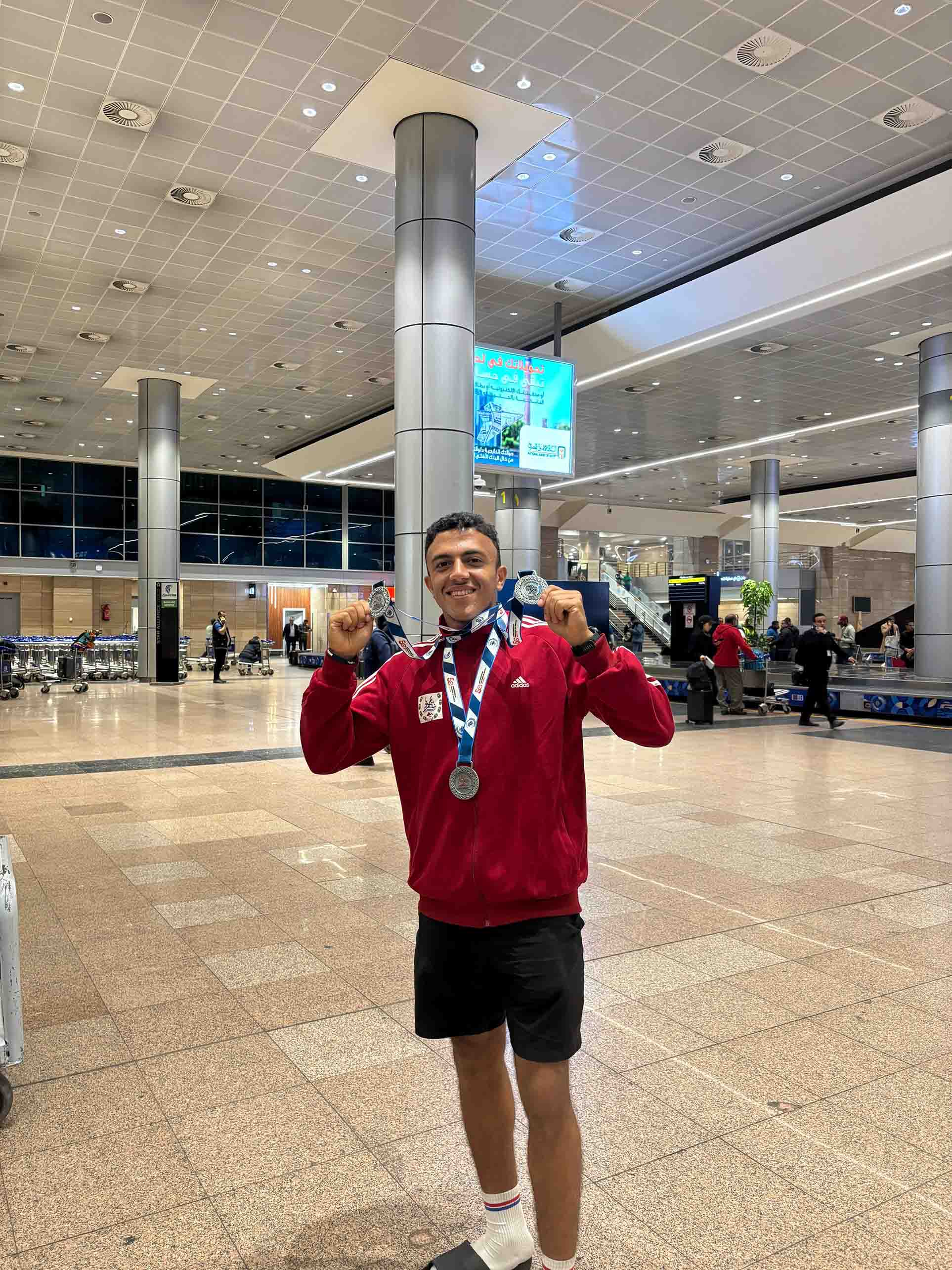
In 2025, Ali Alaa, alongside fellow rower Ayat Saed, won the silver medal at the Senior World Championship in Turkey, which is the best result in Egypt’s history at the senior level. Ali is widely regarded as Egypt's top rower, achieving a recent high world ranking and consistently maintaining his status as the country's best.
Ali did not previously pursue Olympic qualification, as he did not understand its importance, but he recently came to understand its significance. He is currently aiming to qualify for the 2028 Games in Los Angeles.
Rowers often start in other sports before switching to rowing. How did you start rowing, when and why?
I started at the age of fourteen. I had not practised any other sports previously; I started rowing directly. Rowing has been a popular sport in my family for a long time, and my father’s respectable reputation and pride in his rowing career have instilled in me a love for this sport. Although I loved rowing, what always motivates me to continue is my competitive spirit, which led me to eventually join the national team at the age of nineteen.
What is your specialism in rowing?
I started off with lightweight racing before moving on to open-weight rowing. After that, I was one of the very first Egyptians to start practising coastal rowing, and I also competed in indoor rowing competitions. I am one of the few in the world to participate in all three disciplines, and I am considered the most experienced coastal rower in Egypt.
Do you think being involved in all three types affects your performance?
Honestly, before this interview, I was discussing it with a friend, and I'm trying to decide which one to focus on. Considering I was the first Egyptian to participate in coastal rowing and achieved the highest ranking, I think I may gear towards this; however, I am still undecided.
What risks do you face as a rower while training in open water?
Honestly, thank Allah, there are no major risks. The club and the federation provide us with excellent training and good supervision during our practice sessions, as there is also a supporting boat that usually follows us in case of any emergency. It would be better if more boats were monitoring us, but honestly, that is not a major issue.
What do you believe we need to achieve better rankings and results?
Honestly, I would like to thank the federation and its president, Mr. Alamaty, for providing us with the appropriate support and always striving to help us achieve our best. However, what I truly lack is a private boat that I can use exclusively. This would help me achieve better results, and frankly, this requires sponsors. There has never been a boat dedicated to an Egyptian rower, except for the legendary Ali Ibrahim, may Allah have mercy on him. We also need more training camps in areas specifically designed for rowing.
Regarding training camps, what do you think about the new locations in Egypt, like El Alamein?
It is a great place, and I really like it, but honestly, it lacks the facilities for training camps, such as a weight training room and so on. Sometimes we request more facilities that we need for training camps, and sometimes approval is not granted, or permits are not issued.
Tell us about your recent achievement with the champion Ayat Saed at the World Championships.
Honestly, it was a proud moment. We participated in the championships alongside some of the strongest teams in the world. I want to thank the champion, Ayat and give her credit, especially since she has only been involved in the sport for a brief time, almost a year. I always tell her it was because of you, and honestly, that shows us that we can maintain this level if we continue to work towards our goals. I am happy I was able to send an inspiring message to young athletes to say, finally, we can achieve more.
What advice would you like to give to young athletes or to help them progress?
That is a great question, and I have always been passionate about supporting young athletes. My advice would be to set a goal, always enjoy what you are doing, maintain consistency and discipline, and be open to feedback from coaches and mentors. Always surround yourself with the best; they will push you to be better. We have a powerful weapon that no one else has - certainty. I heard a friend say that we have certainty in Allah, and I could not agree more.
What does a day in the life of Ali look like?
My day starts at 5:00 AM with a rowing session before the Nile gets busy. It is a two-and-a-half-hour session, with almost 30 to 35 km row, followed by an hour-and-a-half strength training session. On certain days, I opt for a light snack, while on others, I may participate in a run or schedule a cycling session later in the day. Occasionally, there is another rowing session towards the end of the day, to end before sunset. Our week is quite long and demanding, with other sports like running and cycling also involved.
What are your aspirations for the future?
My short-term goal is to work towards the Mediterranean Games, and honestly, I am incredibly happy with the current preparation and with the system implemented by the President of the Federation, who is trying his best to provide everything. Their efforts are truly commendable, and I am grateful. My long-term goal is to qualify for the Los Angeles 2028 and win more medals.
Do you consider rowing as your job?
Honestly, no. I need to work outside of rowing so I can find myself. I am currently working for a sports company in data analysis. I would like to thank the company I work for, as they are incredibly supportive and flexible with my schedule; however, I have yet to find sponsorship to support my dream of qualifying for the next Olympic Games.
Thank you, Ali. Is there anything you would like to add to conclude the interview?
I would like to thank Sports and Fitness magazine for featuring me in their latest issue, and a reminder for all sportspeople out there, for any sport, the only allowed performance-enhancing drugs are consistency and discipline.
Ayat Ahmed Saed
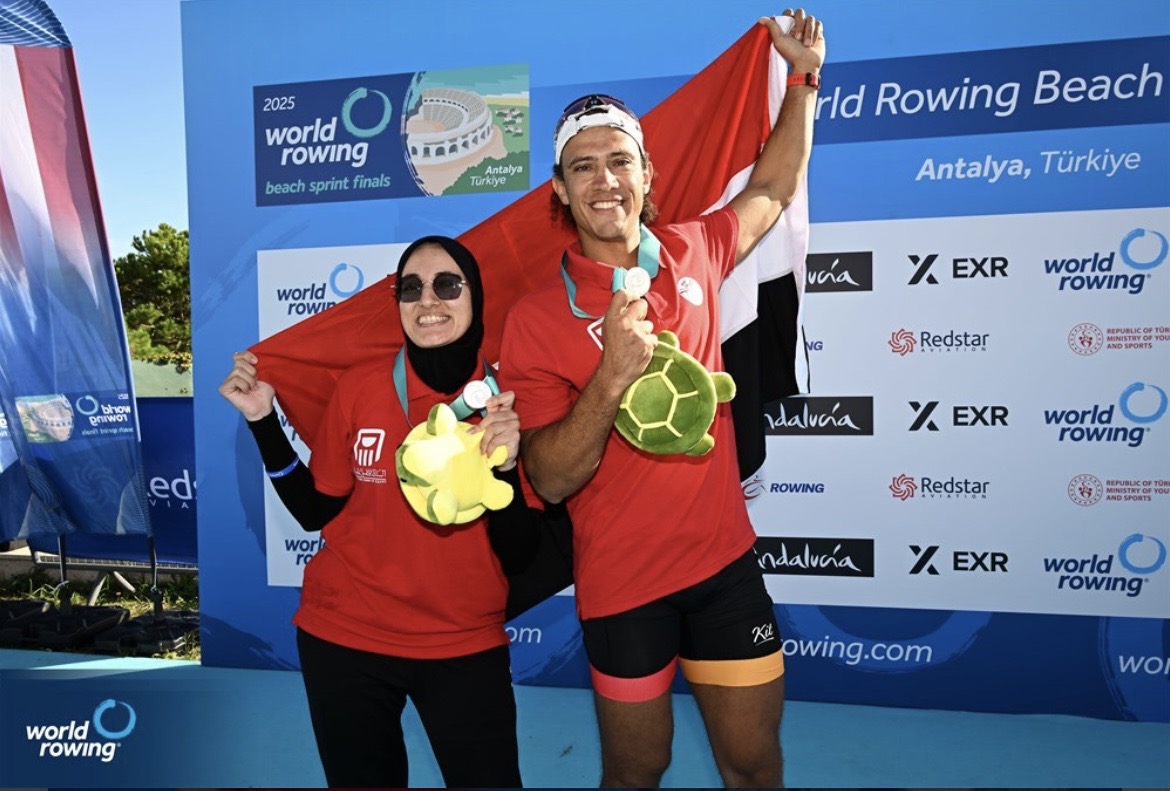
Another rising star in rowing is Ayat Ahmed Saed, who recently joined Ali Alaa in achieving the silver medal at the 2025 Coastal Rowing World Championship. Born in 2003, Ayat is known for her love of sport. Although she started her rowing career at the end of 2024, she quickly found that rowing has become such a passion and has led her to achieve amazing results when coupled with the expertise of Ali Alaa.
What does a typical day look like for you, Ayat?
On a typical day, I have two rowing sessions, one in the morning and one in the evening. I wake up early at 5:30 AM, pray and then I have a healthy breakfast to get me prepared for the first session, which usually involves rowing on the Nile. I then go to work, and around 6 pm, I have my second session before going back home to unwind, have a light dinner and spend time with my family.
Can you share a few of your goals?
I am aware that I am new to the sport, but I am so happy that I have managed to achieve so much in such a short amount of time. I would like to compete in more international competitions so that I can achieve more international medals for a sport that I have become so passionate about. My most important aim is to qualify for the Olympic Games in Los Angeles 2028, which would be one of the most life-changing achievements for me.
______________________________________________
Kayaking
Kayaking is a water sport that uses a kayak, a lightweight and streamlined boat, and involves paddling with a double-bladed paddle, where the paddler sits with their legs mostly extended in front of them, facing the direction they are moving towards. Flatwater kayaking takes place on calm lakes, rivers and lagoons, whereas whitewater kayaking is conducted in fast-moving rivers and rapids. There are also sea and open-water kayaking, which takes place in open water.
Egypt’s kayaking debut at the Olympics was in the London 2012 games, with Mustafa Said being the first ever Egyptian to represent Egypt in this sport. Since then, Egypt has had several kayakers competing in the Olympics, including the Rio 2016 Olympic Games, which had competitors in men’s and women’s 200 m kayak singles. The Tokyo 2020 games had female competitors competing in the women’s 200 m and 500 m races. A kayaker eager to be involved in the next Olympic Games is Ahmed Khalid Ismail, born in 2001.
Ahmed Khalid Ismail

How did your kayaking journey begin?
When I was fifteen, I started kayaking after trying several other sports—karate, swimming, judo, and football—but found that none of them truly captured my interest enough to continue. I began by experimenting with kayaking for fun, followed by joining a club and then the national team. As time went by, kayaking became a huge passion.
What are your career highlights?
I am currently in my tenth season of kayaking. I am happy to say I have won gold and first place in my very first championship at such a young age, which also led to receiving offers from various kayaking clubs. My journey continued by joining the national team at the age of eighteen and participating in the 2018 Nile International Championship, achieving second place. I also participated in the 2019 African Championships, achieving first and third place. Then came a break due to COVID-19 and an injury, which lasted two years; after that, I returned to the podiums in the African and international championships.
What does a day in your life look like?
My day begins with an hour-long session or sometimes up to an hour and a half long session in the morning, and my training often includes running, cycling, and strength training. Although it requires sacrifices to maintain consistency, I am still able to train around my work schedule.
Can you share some of your personal goals?
I have already managed to win over eighty medals during my career between local, continental and international competitions, so I am aiming to reach my goal of winning one hundred medals. Another goal of mine is to qualify for the Los Angeles 2028 Olympic Games and to achieve a lifelong dream of winning a medal at one of the most internationally recognised competitions.

Mohamed Khaled Ismail
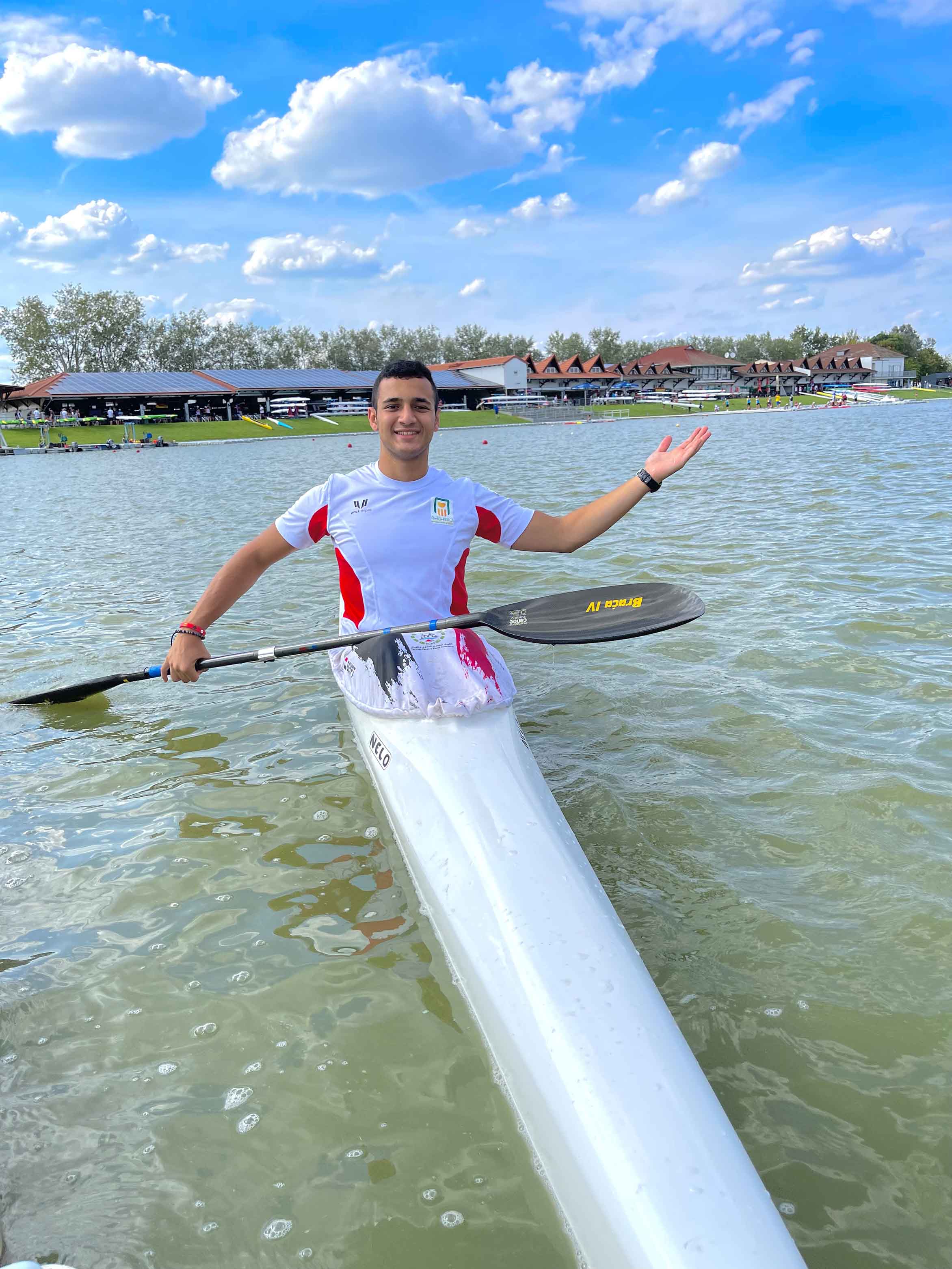
Mohamed is the younger brother of Ahmed Khaled Ismail, born in 2005 and started playing sports at the age of eleven. He was a member of the Giza Yacht Club when kayaking was still a relatively new sport, rapidly gaining popularity. After watching his older brother compete, he received an invitation to try it, and the experience quickly blossomed into a deep love for sport.
What are your career highlights?
For many years, I have practised kayaking, accumulating several medals and titles. At the age of eighteen, I was able to achieve three titles in the Arab Championships and second place in the African Championship, with my most recent win being a gold at the 2025 African Championship. I have also participated in various world championships, and I am striving to set new records.
What does a day in your life look like?
My brother and I have our first session in the morning with a focus on training. I then go to study and make sure I am back again at 3 PM for the second training session of the day. In the summer, when the days are longer, we can train for longer periods of time.
What goals do you have?
I aim to achieve even better results, and the goal is for the entire Egyptian Kayak National team to work towards Olympic qualification and achieve positive outcomes.

Canoeing
Canoeing is a water-based sport in which athletes propel a small boat using upper-body strength and either single or double-bladed paddles, with the paddler either kneeling or sitting. Canoeing competitions include canoe sprints and canoe slaloms – both of which are a part of the Olympic Games. Others include recreational canoeing through lakes and calm waters, whitewater canoeing through natural river rapids and coastal canoeing, which takes place in the open sea.
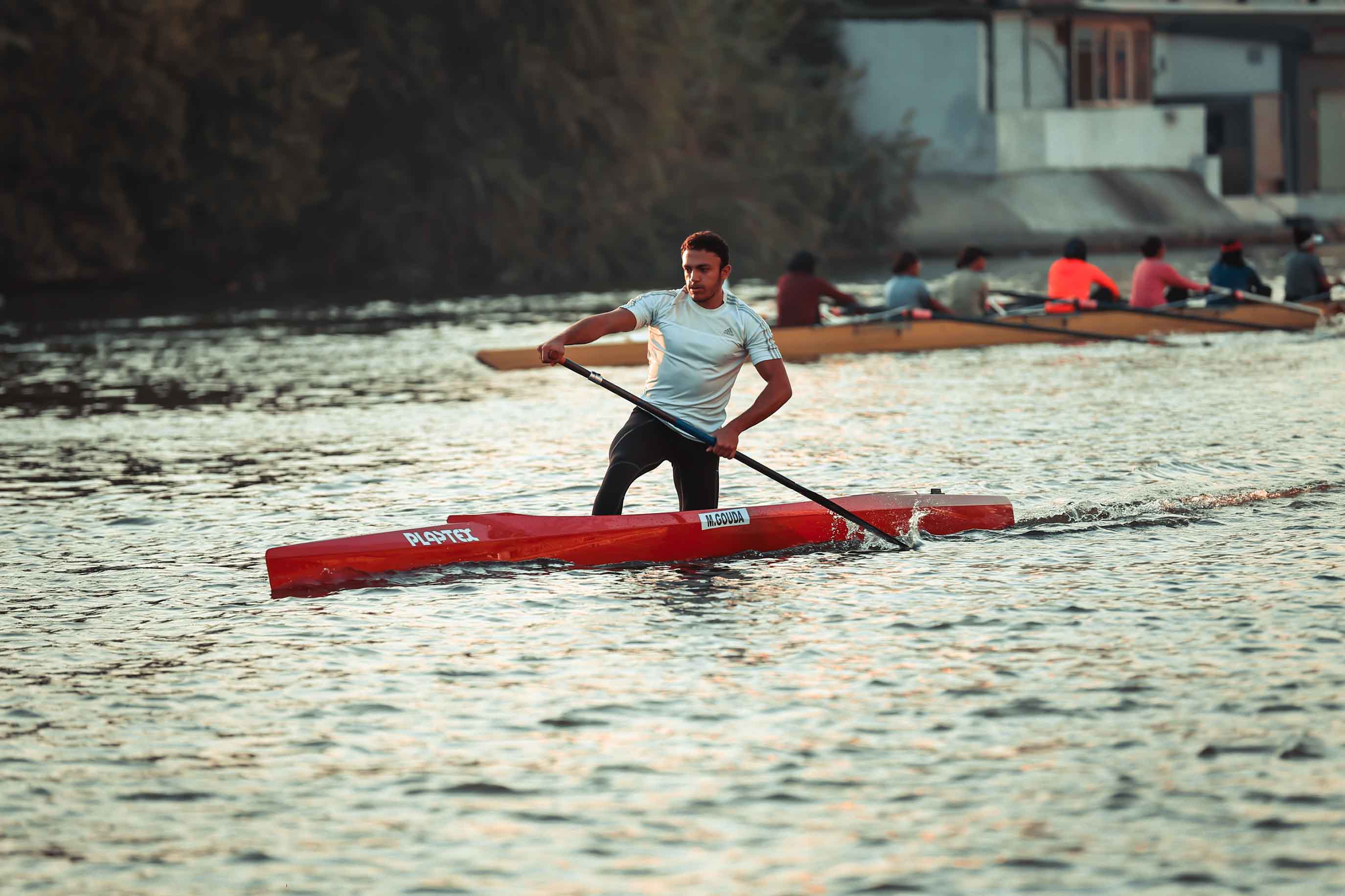
A prominent canoeist is Mohamed Tarek Mohamed Gouda, born in 2004, and one of Egypt’s rising stars in the sport. He first took an interest in sports such as swimming and handball, but eventually became interested in canoeing whilst observing athletes training on the Nile. By the age of fifteen, he had started canoeing and is now one of Egypt’s top canoeists.
Mohamed Tarek Mohamed Gouda
Could you share some of the most notable moments from your career?
One of the biggest highlights in my career is winning the African Championship twice, as well as winning the Elite Arab Championship in addition to the Arab Junior title. My biggest international achievement was when I finished 18th place in the 2025 World Cup.
What does a day in your life look like?
I wake up early around 5 AM, ready for my first canoe session on the Nile. I then go to study at university and later complete my second session of the day, which usually includes strength and conditioning, running, and cycling.
Can you share some goals you have set for yourself?
I still feel like I have a lot to accomplish, and my biggest goal is not only to qualify for the Olympics in Los Angeles 2028 but also go on to win an Olympic medal. I spend a lot of my time preparing by going to camps with both the Egyptian federation and the international federation.
Across rowing, kayaking and canoeing, the athletes share a common obstacle that continues to limit their progress at the highest level, which is a lack of locally manufactured training boats in Egypt. Without consistent access to dedicated, high-performance boats of their own, athletes are often forced to share resources, making elite-level preparation more challenging. Addressing this gap would not only improve training conditions but could play a crucial role in elevating Egypt’s presence on the international water sports stage.
The Most Popular ‘Bandersnatch’ Choices Show We're Not All Complete Monsters
BY: Taylor Hosking
The Most Popular ‘Bandersnatch’ Choices Show We're Not All Complete Monsters
BY: Taylor Hosking
The Most Popular ‘Bandersnatch’ Choices Show We're Not All Complete Monsters
BY: Taylor Hosking
suggestions
-
Water Sports
Freediving in Egypt
Exploring the Red Sea on a Single Breath
-
Water Sports
The Boat Club
Porto Marina to Hosted the First Edition of The Boat Club - Egypt
-
Water Sports
Rolex and the World’s Most Prestigious Regattas
A Natural Alliance Between Time and the Sea
-
Water Sports
Exploring the Red Sea at Night
After Hours Underwater
-
Water Sports
A Diver’s Paradise
Egypt’s Top Diving Destinations
-
Water Sports
A Fragile Paradise
Endangered Wildlife of the Red Sea
Water Sports
Freediving in Egypt
Exploring the Red Sea on a Single Breath
Water Sports
The Boat Club
Porto Marina to Hosted the First Edition of The Boat Club -
Water Sports
Rolex and the World’s Most Prestigious Regattas
A Natural Alliance Between Time and the Sea
Water Sports
Exploring the Red Sea at Night
After Hours Underwater
Water Sports
A Diver’s Paradise
Egypt’s Top Diving Destinations
Water Sports
A Fragile Paradise
Endangered Wildlife of the Red Sea